
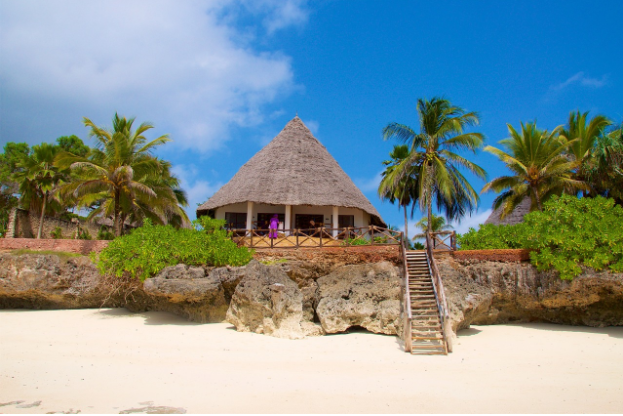
Combine pristine Indian Ocean beaches with Africa’s greatest wildlife spectacle — the ultimate Tanzania dual experience.
Introduction
Tanzania is a country of extraordinary contrasts. On its eastern coastline lies Zanzibar — the legendary Spice Island, an archipelago of coral-fringed beaches, labyrinthine old stone towns, clove plantations, and turquoise waters that have enchanted traders, explorers, and travelers for over a thousand years. A short flight inland from this paradise, the country unfolds into something altogether different: vast savannahs, ancient migratory corridors, and wildlife landscapes of a scale and density that exist nowhere else on the planet.
The combination of a Zanzibar beach holiday with a mainland Tanzania safari is widely regarded as one of the finest dual-destination travel experiences in the world. Sun, sea, and sand on one hand — lions at sunrise, elephants at dusk, and the thundering migration on the other. For travelers seeking a journey that delivers both total relaxation and profound wildlife immersion, a Tanzania safari tour departing from Zanzibar is the definitive answer.
This guide walks you through everything you need to know: how to get from Zanzibar to Tanzania’s safari parks, which parks to visit, how to structure your itinerary, what to expect, and how to make the most of every moment between the reef and the plains.
Why Combine Zanzibar with a Tanzania Safari?
The logic of combining Zanzibar with a mainland safari is both practical and deeply satisfying. Tanzania’s primary international gateway is Julius Nyerere International Airport in Dar es Salaam, which sits just a 25-minute flight from Zanzibar. Kilimanjaro International Airport, serving the northern safari circuit, is also directly accessible from Zanzibar via daily scheduled flights.
Most travelers structure their Tanzania safari tours from zanzibar experience in one of two ways: begin with the safari on the mainland and conclude with a beach recovery in Zanzibar, or start in Zanzibar and build anticipation before heading inland to the wildlife parks. Both approaches work beautifully, though many experienced travel advisors recommend saving Zanzibar for the end — allowing you to decompress, reflect, and enjoy the beaches with the emotional richness of incredible safari memories still vivid in your mind.
Beyond logistics, there is a deeper experiential coherence to this combination. The Indian Ocean that laps Zanzibar’s shores is the same ocean whose monsoon winds shaped the Swahili culture visible in every carved doorway and coral-stone alley of Stone Town — a culture also present in the communities surrounding Tanzania’s national parks. Traveling between Zanzibar and the mainland is not merely moving between beach and bush; it is moving through layers of the same extraordinary civilization.
Getting from Zanzibar to Tanzania’s Safari Parks
By Air
Flying is the most practical and popular method of reaching mainland safari parks from Zanzibar. Several airlines operate scheduled and charter services connecting Zanzibar with mainland Tanzania’s key airstrips:
Zanzibar to the Northern Circuit (Serengeti, Ngorongoro, Tarangire, Lake Manyara): Flights operate daily from Zanzibar Abeid Amani Karume International Airport to Kilimanjaro International Airport (KIA) and Arusha Airport. From Arusha — the safari capital of northern Tanzania — road transfers or light aircraft connect travelers to airstrips throughout the Serengeti ecosystem. Journey time from Zanzibar to a Northern Circuit camp typically ranges from 3 to 5 hours depending on connections.
Zanzibar to the Southern Circuit (Selous/Nyerere, Ruaha, Mikumi): Flights connect Zanzibar to Dar es Salaam, from where domestic carriers operate light aircraft services to the southern parks. The southern circuit is Tanzania’s great undiscovered safari frontier — vast, wild, and dramatically less visited than the north.
By Sea and Road
A high-speed ferry connects Zanzibar to Dar es Salaam in approximately 2 hours. From Dar es Salaam, road access to Mikumi National Park (approximately 300 kilometers west) is feasible for those preferring an overland experience. However, for most Northern Circuit destinations, flying remains far more efficient.
Tanzania’s Premier Safari Parks: A Guide for Zanzibar-Based Travelers
The Serengeti National Park
No name in African wildlife is more evocative than the Serengeti. Tanzania’s largest and most celebrated national park covers 14,763 square kilometers of endless grassland plains, riverine forests, and granite kopje. The Serengeti is the anchor of the Great Migration — the annual movement of over 1.5 million wildebeest, 700,000 zebras, and hundreds of thousands of gazelles in a continuous, seasonal loop through the ecosystem.
Serengeti sightings are extraordinary year-round. The southern Serengeti delivers calving season (January–March), when hundreds of thousands of wildebeest calves are born in rapid succession, drawing massive concentrations of predators. The western corridor hosts dramatic river crossings (June–July), where crocodile-filled Mara River crossings produce scenes of raw natural theater. The northern Serengeti sees the migration’s return crossing (August–October) before the cycle begins again.
The Serengeti is paired naturally with Zanzibar — typically 3 to 5 nights in the park is recommended for a comprehensive safari experience.
Ngorongoro Crater
Described in detail in our companion article, the Ngorongoro Crater is a collapsed volcanic caldera forming a self-contained wildlife sanctuary of breathtaking density. For Zanzibar-departing safari travelers, Ngorongoro is almost always included as a one-to-two-day addition to a Serengeti-focused itinerary. The crater delivers near-certain Big Five encounters — lion, elephant, buffalo, black rhino, and leopard — in a single extraordinary day.
Tarangire National Park
Tarangire is the jewel of Tanzania safari tours from zanzibar landscape that most visitors overlook in favor of its more famous neighbors — and those who include it are invariably glad they did. During the dry season (June–October), the Tarangire River becomes one of Africa’s greatest concentrations of elephants, as thousands of these magnificent animals converge on its banks from across the ecosystem.
Tarangire is also celebrated for its ancient baobab trees — some estimated at over a thousand years old — which lend the landscape a primordial, cathedral-like grandeur. Lion, leopard, cheetah, wild dog, and a spectacular diversity of bird life round out what is Tanzania’s most underrated safari destination.
Lake Manyara National Park
Lake Manyara is a compact park of remarkable diversity, encompassing alkaline lake shores, dense groundwater forest, and open floodplains in a relatively small area. Famous for its tree-climbing lions — a behavioral curiosity unique to a small number of African lion populations — and for vast flocks of flamingo that gather on the lake’s pink-tinged margins, Manyara is frequently incorporated as an introductory or en-route park for northern Tanzania safari circuits.
Selous Game Reserve (Nyerere National Park) — The Southern Circuit
For travelers seeking genuine remoteness and exclusivity, the Selous — recently renamed Nyerere National Park in honor of Tanzania’s founding president — is a revelation. The largest protected wildlife area in Africa, this vast southern wilderness is a world of meandering river channels, miombo woodland, and wildlife populations of staggering scale.
The Selous supports Africa’s largest populations of wild dog, elephant, buffalo, and hippo. Game viewing is conducted not only by vehicle but by boat along the Rufiji River — one of the most thrilling and intimate safari experiences available anywhere on the continent. Proximity to Dar es Salaam makes it a natural Zanzibar pairing.
Structuring the Perfect Zanzibar Safari Itinerary
7-Night Classic Combination
Days 1–3: Zanzibar — Arrive, explore Stone Town, relax on the beaches of Nungwi or Paje, sunset dhow cruise. Days 4–5: Ngorongoro Crater — Fly Zanzibar to Kilimanjaro, transfer to the crater rim, full crater game drive. Days 6–7: Serengeti National Park — Transfer or light aircraft to the Serengeti; morning and afternoon game drives. Return to Zanzibar or depart from Kilimanjaro
10-Night Comprehensive Experience
Days 1–3: Zanzibar — Beach, Stone Town, water activities. Days 4–5: Tarangire National Park — Elephant herds, baobabs, rich birdlife. Day 6: Lake Manyara — Tree-climbing lions, flamingo, forest walks. Day 7: Ngorongoro Crater — Big Five full day drive. Days 8–10: Serengeti National Park — Migration game viewing, sundowner stops, night skies. Return to Zanzibar for final nights or direct international departure
5-Night Quick Escape
Days 1–2: Zanzibar — Beach recovery and Stone Town exploration. Days 3–5: Serengeti — Fly directly from Zanzibar to Serengeti airstrip for focused, intensive game viewing. Return to Zanzibar or Kilimanjaro for departure
Choosing the Right Safari Style
Tanzania safari tours from Zanzibar are available across a spectrum of styles and budgets:
Luxury Lodge Safaris place guests in architecturally stunning, all-inclusive properties where gourmet meals, private guides, and exclusive game drives are the standard. Properties like Four Seasons Serengeti, Singita Mara River, and &Beyond Ngorongoro Crater Lodge set the global benchmark for safari luxury.
Classic Tented Camp Safaris deliver the authentic bush experience — falling asleep to lion calls, waking to birdsong, and game drives in intimate open vehicles. Many mid-range and premium tented camps rival lodges in service quality while offering a more immersive connection to the wilderness.
Group Safari Tours offer a cost-effective option for solo travelers and small groups, combining guests into shared safari vehicles with scheduled itineraries. Quality varies significantly between operators; always verify accreditation with the Tanzania Association of Tour Operators (TATO).
Private Customized Safaris are tailored entirely to individual preferences — departure dates, pace, park selection, accommodation style, and activity mix are designed specifically for you. Recommended for honeymoons, family safaris, and milestone celebrations.
Key Takeaways
- Zanzibar and mainland Tanzania’s safari parks form one of the world’s finest dual-destination travel experiences, combining beach paradise with Africa’s greatest wildlife landscapes.
- Flights from Zanzibar to Kilimanjaro International Airport take approximately 1.5 hours, making the northern safari circuit easily accessible.
- The Serengeti and Ngorongoro Crater are the anchor parks of the northern circuit and the most popular safari destinations for Zanzibar-based travelers.
- Tarangire National Park is Tanzania’s most underrated safari destination, offering exceptional elephant encounters and dramatically beautiful baobab landscapes.
- Nyerere National Park (Selous) pairs naturally with Zanzibar for travelers preferring the southern circuit — closer, less visited, and offering boat safaris on the Rufiji River.
- Most travel advisors recommend ending your Tanzania trip in Zanzibar rather than beginning there, allowing the beaches to serve as a restorative close to the safari experience.
- A minimum of 7 nights is recommended to do justice to both Zanzibar and at least two mainland safari parks.
- Tanzania safari tours operate year-round, with the dry season (June–October) offering the most reliable game viewing and the green season (November–May) providing lush landscapes and significantly fewer crowds.
- Always book through a TATO-accredited operator to ensure safety, quality, and that your tourism spend supports legitimate conservation and community programs.
Questions & Answers
Q: What is the best time of year to combine a Zanzibar holiday with a Tanzania safari? The dry season from June through October is broadly considered the finest time for both safari and beach travel. Wildlife concentrates around water sources, game viewing is predictable, and Zanzibar enjoys warm, dry weather ideal for diving and snorkeling. The January–February period is excellent for the Serengeti calving season and is also a favorable Zanzibar beach period. April–May brings long rains to both destinations and is generally best avoided by first-time visitors.
Q: How many days should I spend on safari versus in Zanzibar? A well-balanced 10-to-12-night Tanzania experience might allocate 3 nights to Zanzibar and 7 to 9 nights across two or three safari parks. For shorter trips of 7 nights, 3 nights in Zanzibar and 4 nights across the Serengeti and Ngorongoro delivers a satisfying balance. The key is resisting the temptation to move too quickly — deep game viewing rewards patience and multiple drives in the same park.
Q: Is malaria a concern when traveling between Zanzibar and the mainland? Both Zanzibar and mainland Tanzania’s safari parks are malaria-endemic areas. Travelers are strongly advised to consult a travel medicine physician before departure and to take appropriate antimalarial prophylaxis. Covering exposed skin at dawn and dusk, using insect repellent with DEET, and sleeping under mosquito nets are additional protective measures. Most quality safari lodges and camps provide nets and take active anti-mosquito measures within their properties.
Q: What is the difference between the northern and southern safari circuits in Tanzania? The northern circuit — encompassing the Serengeti, Ngorongoro, Tarangire, and Lake Manyara — is Tanzania’s most developed and most visited safari region, with excellent infrastructure, a wide range of accommodation, and extraordinarily reliable wildlife sightings. The southern circuit — principally Nyerere National Park and Ruaha — is dramatically less visited, offering a more exclusive and remote wilderness experience, with boat safaris adding a dimension unavailable in the north. Both are exceptional; the choice depends on your priorities for exclusivity versus accessibility.
Q: Can I combine a Zanzibar beach holiday with climbing Mount Kilimanjaro and a safari? Absolutely — this combination is known as the “Tanzania Triple Crown” and is a dream itinerary for adventurous travelers. A typical structure sees climbers summit Kilimanjaro (7–9 days), recover briefly in Arusha or on the Zanzibar beaches, then complete a 4–5 night northern safari circuit. This itinerary requires a minimum of 16–18 days total and excellent physical preparation for the mountain.
Q: Are children welcome on Tanzania safari tours from Zanzibar? Tanzania safari from Zanzibar is a wonderful family safari destination. Most parks and many lodges welcome children of all ages, though some luxury camps have minimum age requirements (typically 8 or 12 years) for safety reasons related to wildlife proximity and open vehicle game drives. Ngorongoro Crater, with its enclosed geography and virtually guaranteed wildlife sightings, is particularly well-suited to younger children. Zanzibar’s calm northern beaches are ideal for families with small children.
Conclusion
Tanzania safari tours from Zanzibar are not simply travel itineraries — they are life-defining journeys that compress within a single trip the full majesty of what our planet has to offer. From the powder-white sands and coral gardens of the Indian Ocean archipelago to the boundless golden savannahs where the greatest wildlife spectacle on Earth has unfolded for millions of years, this combination speaks to the deepest human instincts for beauty, adventure, and wonder.
Zanzibar grounds you — in history, in culture, in the sensory pleasure of a world built on spice routes and monsoon winds. The safari liberates you — from schedules, from screens, from the noise of modern life — and deposits you, breathless and humbled, into a world governed entirely by the rhythms of nature.
Together, they form a journey greater than the sum of their extraordinary parts. Whether you spend five nights or fifteen, whether you travel in luxury or with a tent under the stars, Tanzania will transform you. And when you return home — sun-bronzed from Zanzibar’s beaches, wildlife encounters still vivid behind your eyes — you will understand, without a shadow of doubt, why so many travelers who make this journey return to do it all over again.